Graveyard Keeper 2 tips and tricks

Most of the sequel’s difficulty is planning, not execution. The developer put it plainly when describing the changes: there will be less grinding this time. What replaces the grind is a set of decisions you can get wrong for a week at a time.

Facts checked September 16, 2026Reading time 8 min readEvidence cited per claim

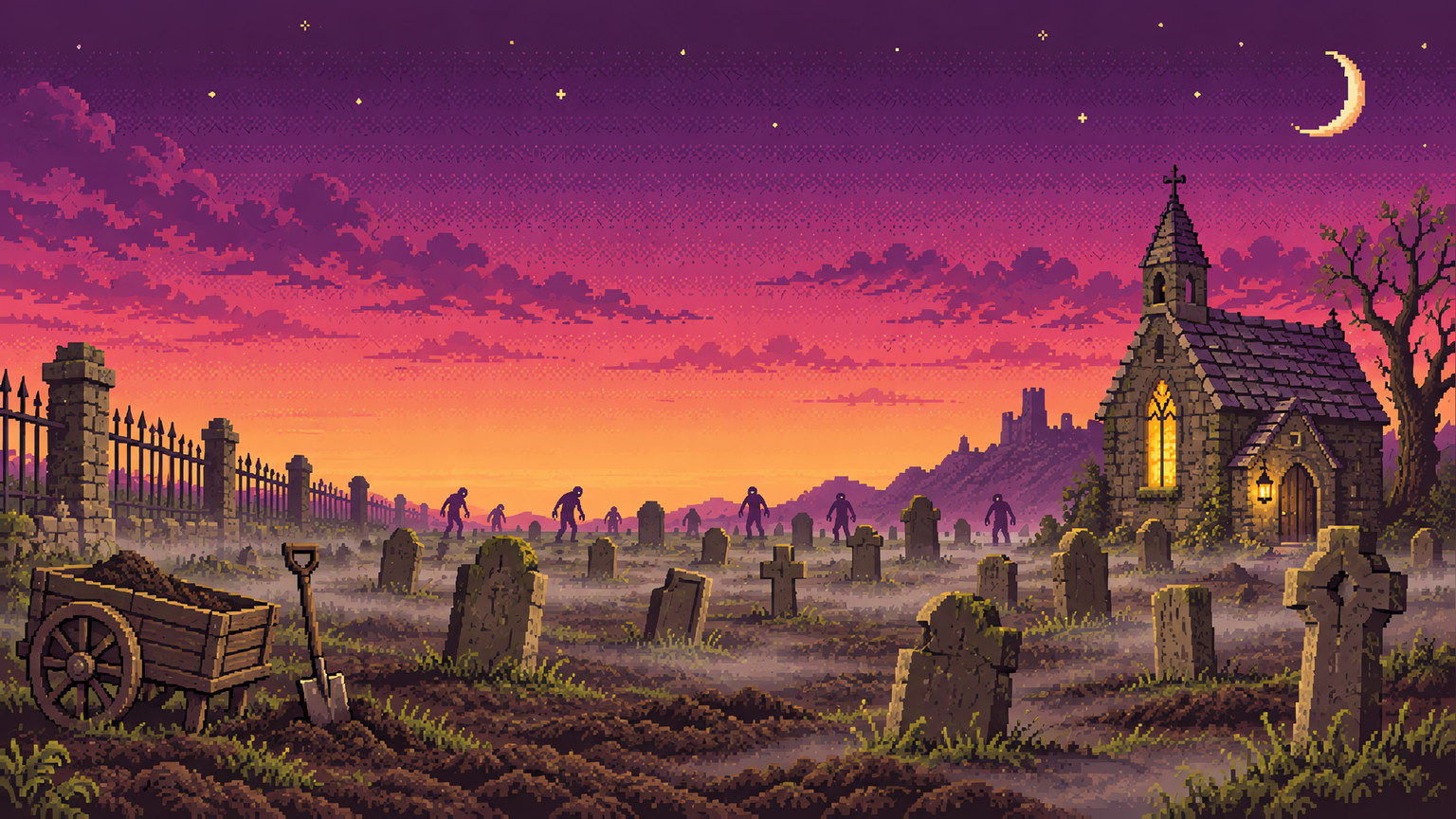
Pixel-art graveyard at dusk: rows of weathered headstones, a lantern-lit chapel and a wheelbarrow beside a misty plot under a purple-magenta sky.

The one rule underneath the rest

When several objectives are valid at once, take the one that unlocks something over the one that improves something. A graveyard upgrade competes with a village request; the village request may reveal a missing technology; a production problem may reveal why you need zombies. Sorting tasks into unlock versus improve, and doing unlocks first, is the habit that makes the rest of this page unnecessary.

What to do differently

Grouped by the system each one touches. Everything here traces to a developer description or to pre-release play, and the difference is marked.

Sort corpses by skull colour at the morgue

White skulls are burial quality; red skulls are workforce potential. Once resurrection exists, deciding at the plot is too late. Keep two piles — clean for the graveyard, corrupt for the zombies — and the whole dead-body pipeline becomes easier to reason about.

Build the input chain before the worker

A staffed machine with nothing to process is worse than an idle one, because you spent a corpse on it. Pre-release write-ups are blunt that resurrection materials gathered before iron processing unlock are wasted effort.

Fix Mastery with tools, not with a better corpse

When a zombie stands at a station and does nothing, the usual cause is Mastery rather than the recipe. Equipment appears to raise effective Mastery, so a tool upgrade can be the whole fix — and it is far cheaper than preparing another body.

Do not confuse transport with capability

The Supplier Station moves goods. It does not make an under-qualified zombie able to work. Treating a logistics building as a fix for a skills problem is the mistake pre-release guides flag most often.

Plan your base around Milestones

Milestones replaced teleportstones, so fast travel is now a coverage question rather than an item you buy. Place factories, storage and crafting so they sit within a short hop of a Milestone, or you will spend the mid-game walking.

Treat Town buildings as market decisions

Restored buildings create markets for your goods. Choose the next one by asking what you already have a surplus of, not by what looks nearest to finished. Without restored vendors, factory-scale output has nowhere to sell.

Raise graveyard quality by upgrading, not expanding

Weak graves and poor corpses slow the early quality target. Improving what stands beats adding another row, and it keeps your material spend pointed at the score that gates the next objective.

Read the unlock chain before gathering

Check that you can actually build the thing you are gathering for. The Tech Tree gates machines behind nodes, and several nodes behind others; a day spent harvesting for a distant machine is a day not spent opening the system that would have made it cheap.

Prepare for the town fight before it starts

The demo-observed campaign puts a squad-control battle at the Town behind a guard who wants your equipment count raised. Spiked barricades act as static anchors, and arriving at the minimum preparation level is tight rather than comfortable.

Leave the world running

The developer states that even after the story ends, The Town continues to exist and evolve on its own. That is a hint about how the systems are meant to be played: build an engine you can walk away from, rather than one that needs you standing next to it.

Evidence

Which tips are developer-stated and which are demo-observed

Two of the habits above rest on a single pre-release source. They are useful and they are not confirmed, so they are separated here.

Developer-stated

Corruption raising zombie skills, zombies not needing food, semi-automatic machines in underground factories, Milestones replacing teleportstones, buildings creating markets, bigger and wealthier Towns yielding more and better corpses, the Town continuing to evolve, and the reduced-grinding framing.

Unconfirmed

Demo-observed, single source

Mastery as the blocker when a zombie will not work, equipment granting Mastery bonuses, the Supplier Station as a transport rather than a capability fix, resurrection materials being wasted if stockpiled early, and the preparation gate on the first town battle.

Structural, from the developer’s loop

Taking unlocks before improvements, and treating a stalled later stage as an upstream shortage. These follow from the developer describing the four stages as each feeding the next.

Where these facts come from

Graveyard Keeper 2 is not out yet, so nothing here is reproduced from a finished-game wiki. Each entry below is labelled by what it is: a developer or publisher source, a platform store listing, a press report, a video, or a fan-maintained page. Fan pages are used for terminology only, never for numbers.

  • Store listing Graveyard Keeper 2 on Steam (app 4358690)The most detailed platform listing: 11 interface languages, single-player only, full controller support with DualShock and DualSense entries, Steam Cloud, Achievements, Family Sharing, and the Windows minimum and recommended specifications.
  • Fan page gk2guide.wiki — Graveyard Keeper 2 Walkthrough: Progression OrderA pre-launch fan page that is explicit about the limits of what exists: it states there is no published step-by-step walkthrough and that any site claiming one before September 22 is guessing. Its four-stage framing (graveyard, automation, Town, army) is a reading of the developers’ own descriptions rather than datamined structure.
  • Fan page graveyard-keeper2-wiki.wiki — Guides indexFrames the sequel’s loops as corpses scored on both white skulls (quality) and red skulls (corruption), with Milestones replacing the original’s teleportstones and Talents softening repeat actions. Used for vocabulary.
  • Fan page dq7reimagined.com — How to Use Zombies in Graveyard Keeper 2Covers putting zombies to work, diagnosing Mastery and equipment problems, production output, the Supplier Station build, and preparing the resurrection room. Terms from this page are used as terminology only; no throughput or cost figure is repeated here.
  • Fan page dq7reimagined.com — Graveyard Keeper 2 Beginner GuideSource of the opening route described on the beginner page: escape the ruined Inquisitor district, collect the free sword and armour at the town defences, go west to the abandoned Inquisitor base, run the first autopsy, finish the grave and its sign, hand in the Burial Certificate, then push Graveyard Quality to 10. Written against the pre-release build.
Questions

Tips questions

What is the biggest mistake in Graveyard Keeper 2?

Reacting instead of planning. The specific version of that is spending early resources on a crafting path the Tech Tree cannot support yet, or filling the graveyard with weak graves when the objective is a quality score. When two tasks are available, take the one that opens a system.

Should I bury clean corpses or corrupt ones?

Both, for different purposes. White skulls raise burial quality and income; red skulls make a zombie able to develop better skills. Sort them at the morgue into a graveyard queue and a workforce queue rather than deciding at the plot.

Why is my zombie not producing anything?

Check Mastery first. A zombie at a station with a recipe queued may lack the skill to run it, and equipment that raises effective Mastery appears to be the fix. A Supplier Station addresses hauling, not capability, so building one will not solve a Mastery problem.

How should I lay out my base?

Around Milestone coverage. Because Milestones are the fast-travel system and teleportstones are gone, keeping zombie workers, storage and crafting stations within a short hop of a Milestone removes most of the mid-game tedium. Spread-out bases are the mistake pre-release coverage warns about most.

Is it worth restoring the Town early?

It is worth treating as a main system rather than a side activity. Town restoration gates the vendors that make factory-scale production profitable, sends more corpses as it grows, and improves corpse quality as it becomes wealthier and more sinful. All three feed directly back into the graveyard.

Is Graveyard Keeper 2 less grindy than the first game?

The developer says so directly, and the systems support it: a Talent layer that passively boosts gathering, crafting and combat, zombie automation of production, and Milestones replacing the original’s travel clutter. What replaces the grind is a larger set of planning decisions.